
 EN

Accelerating Telecom Sustainability: A Strategic Review of China Tower Weifang Base Station Radiative Cooling Deployment
As the foundation of the modern digital economy, communication base stations are the indispensable enablers of 5G connectivity. However, the rapid expansion of 5G networks has brought an unprecedented energy challenge. Studies show that air conditioning and cooling energy consumption account for 30% to 50% of the total operating costs for a typical base station. In the Weifang region, China Tower Branch has implemented a pioneering deployment of radiative cooling technology. This initiative represents a critical pivot toward sustainable telecommunications, aiming to lower PUE (Power Usage Effectiveness) and enhance infrastructure resilience against extreme summer heat.
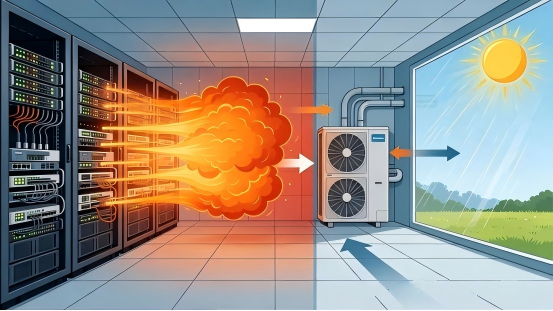
The 5G Thermal Challenge: Compounding Heat Loads
The transition from 4G to 5G has led to a 300% to 400% increase in power consumption per site. 5G equipment generates significantly more heat, and for base stations located on rooftops or in sun‑drenched environments, this internal heat is compounded by solar radiation. This creates a "thermal trap" effect within the equipment room, resulting in several critical issues:
• Electricity Costs: Cooling represents the single largest variable cost in base station operations. As electricity prices rise, the pressure to find efficient alternatives increases.
• Reduced Equipment Lifespan: High operating temperatures accelerate the aging of sensitive semiconductors and batteries. Lithium batteries are particularly sensitive to heat, which can reduce their service life by over 50%.
• Grid Instability: During heatwaves, the simultaneous high‑load operation of thousands of sites can strain local power grids.
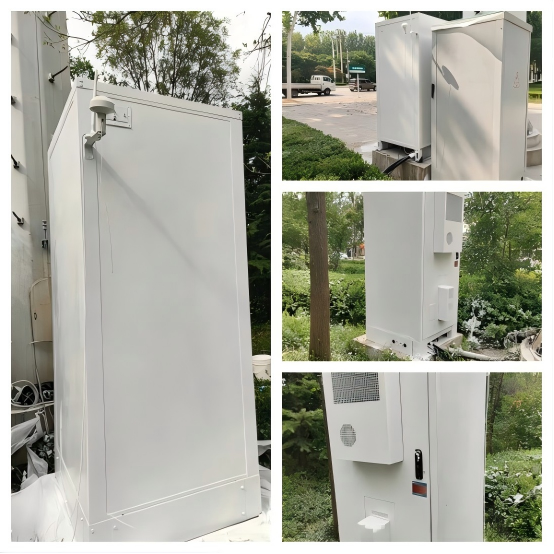
The Science Of Passive Radiative Cooling: "Dumping" Heat Into Space
The Weifang project utilizes a two‑pronged approach using radiative cooling film and coating. Unlike standard reflective paints, these materials leverage the physics of passive radiative cooling to dump heat into the deep universe.
1. Solar Energy Rejection
The materials reflect up to 95% of incident sunlight, preventing the base station structure from absorbing heat. This is achieved through a multi‑layered photonic structure that scatters sunlight across the entire solar spectrum.
2. Infrared Thermal Pumping
The secret of this technology is its high thermal emissivity within the 8‑13μm "Atmospheric Window." The base station surface acts as an infrared radiator, dumping heat directly into the cold vacuum of outer space (3K). This process is completely passive, requiring no power source.
Strategic Implementation In The Weifang Area
China Tower Weifang selected representative sites to pilot a combination of film and coating solutions, tailored to the specific geometry of each site:
Radiative Cooling Film for Roofs
Rooftops receive the most direct solar exposure. A specialized radiative cooling film was applied to the roofs of equipment shelters, providing a high‑efficiency thermal shield and reducing the "roof conduction" effect that heats the interior racks.
Radiative Cooling Coating for Walls and Cabinets
For vertical surfaces and outdoor cabinets containing power supplies, a spray‑on radiative cooling coating was used. This coating offers excellent adhesion and resistance to industrial pollutants common in the Weifang industrial corridors.
Measurable Outcomes And Strategic Benefits
Data from the pilot sites in Weifang has shown promising results in three key areas:
• Direct Energy Savings: Sites treated with radiative cooling materials saw a 12% to 22% reduction in air conditioning electricity consumption during the summer months.
• Improved PUE: The overall site efficiency improved, bringing Weifang China Tower closer to industry‑leading PUE targets of 1.2 or below for 5G sites.
• Enhanced Reliability: Internal cabinet temperatures were reduced by an average of 5°C, providing a safer operating margin during peak traffic hours when equipment heat is at its maximum.
Operational Best Practices For Scalable Deployment
To maximize the benefits, Weifang China Tower has identified several key best practices. First, site selection should prioritize "high‑load" and "high‑exposure" sites. Second, the integration of these materials should be combined with smart energy‑saving controllers. Third, regular inspections are necessary to ensure the film remains securely bonded. By following these guidelines, the telecom operator can ensure that every kilowatt‑hour saved contributes to the long‑term sustainability of the communication grid.
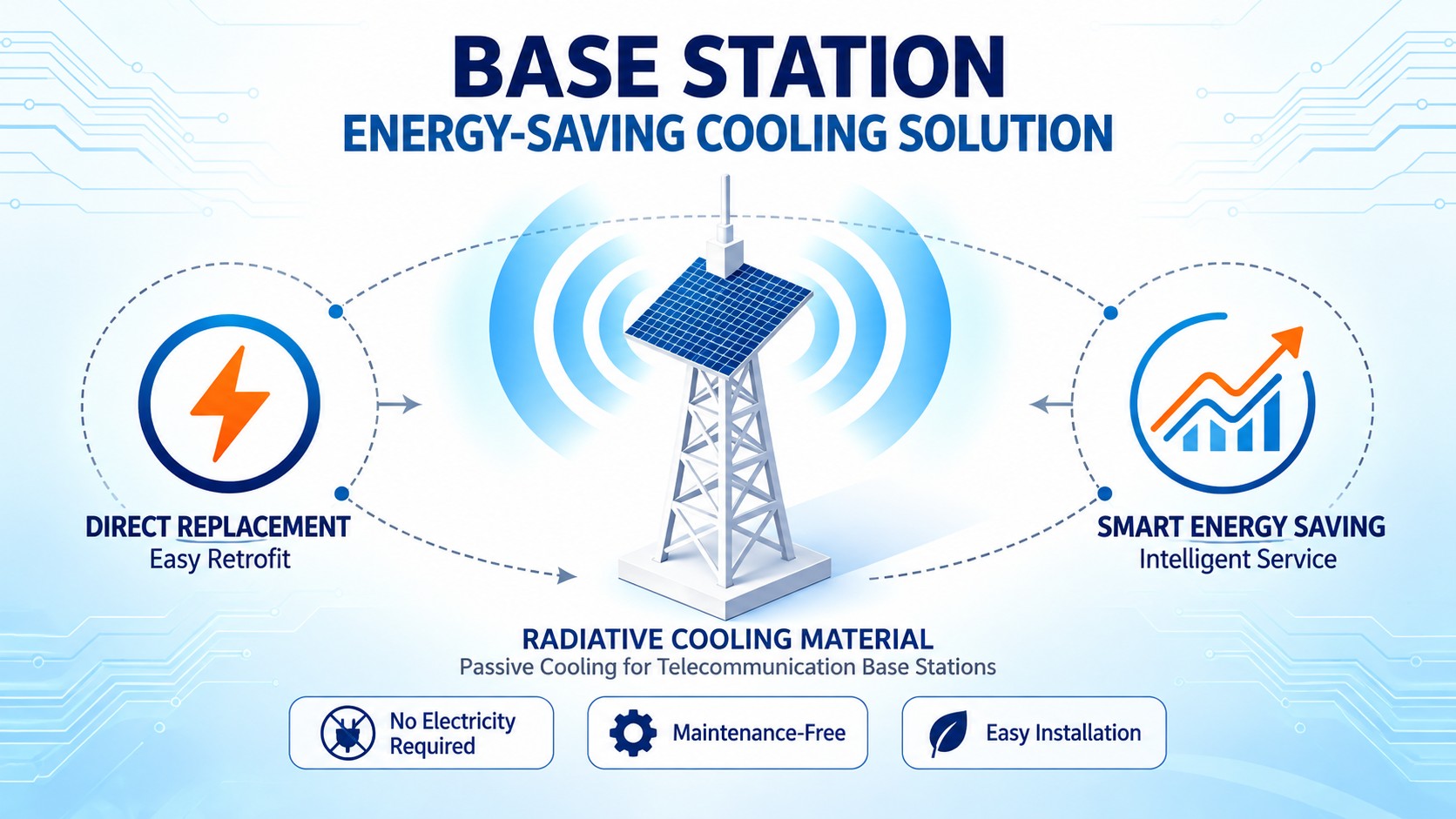
Aligning With China's "Dual Carbon" Goals
The telecommunications industry must decouple network growth from carbon emissions. The Weifang project demonstrates that by adopting zero‑energy cooling technologies, operators can reduce their environmental impact while lowering expenses. This initiative aligns with China's national strategy to achieve carbon neutrality and positions China Tower as a leader in "Green 5G" infrastructure.
Conclusion: The New Standard For Digital Infrastructure
The successful integration of radiative cooling materials at the Weifang base stations proves that passive thermal management is a necessary standard for the 5G era. By leveraging the coldness of space, China Tower is building a more resilient, sustainable, and cost‑effective foundation for the digital world. As we look toward the future, such passive cooling solutions will be the cornerstone of global digital sustainability.