
 EN
EN
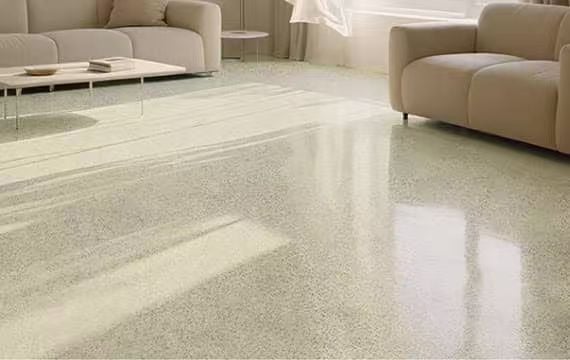
Most people assume that any fabric labeled 'breathable' or 'lightweight' will keep them cool. This assumption fails dramatically when summer heat peaks or industrial environments demand genuine temperature regulation. Ordinary fabrics absorb solar radiation, trapping heat against your skin or building surfaces, creating discomfort and energy waste. The problem lies in how conventional textiles interact with thermal energy. They reflect only a fraction of sunlight and re-emit absorbed heat back downward, defeating the cooling purpose entirely. This is where radiative cooling technology transforms the equation.
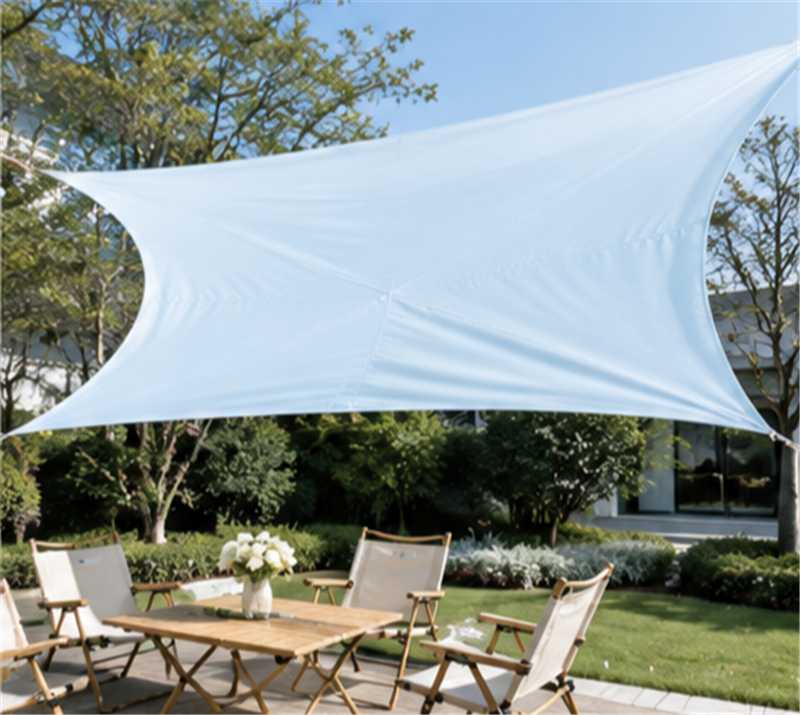
Radiative cooling sunshading fabric represents a fundamental shift in materials science. Unlike ordinary fabrics that passively absorb heat, radiative cooling technology actively channels thermal energy away from surfaces and into space. The mechanism works by reflecting visible sunlight efficiently while simultaneously emitting infrared radiation that passes through Earth's atmospheric window—a transparent zone in the infrared spectrum. This dual action creates a net cooling effect even under direct sunlight, sometimes achieving temperatures below ambient air. Understanding what makes radiative cooling different requires examining the physics, performance benefits, and practical applications that set it apart from conventional textile solutions.
How Radiative Cooling Outperforms Ordinary Fabric Physics
The Fundamental Difference in Light Reflection and Thermal Emission
Ordinary fabrics typically reflect between 20 and 40 percent of incoming solar radiation, depending on color and weave density. The remaining 60 to 80 percent of sunlight enters the fiber structure, converting to heat. This absorbed energy is then re-emitted as thermal radiation, but ordinary fabrics emit predominantly in the infrared bands that do not escape Earth's atmosphere. Radiative cooling technology reverses this dynamic by engineering the material's optical properties at multiple wavelengths. The fabric structure is designed to reflect 90 percent or more of visible and near-infrared sunlight, dramatically reducing heat generation at the source. Simultaneously, the material's surface emits strongly in the infrared wavelengths that align with the atmospheric window, allowing thermal energy to radiate directly into the upper atmosphere and outer space. This engineering breakthrough means radiative cooling fabric stays cooler than ambient temperature even when exposed to full sunlight, a feat impossible for ordinary materials.
Why Ordinary Fabrics Cannot Achieve This Effect Naturally
The constraint lies in material physics. Conventional textiles are manufactured primarily for mechanical properties—strength, flexibility, and durability—rather than optical performance. Cotton, polyester, and standard synthetics absorb broadly across the solar spectrum because their fiber structures lack the engineered spectral selectivity required for radiative cooling. Achieving radiative cooling demands precise control of material composition at the nanometer scale. Multi-layer coatings, specialized pigments, and engineered porosity must work in concert to achieve the high solar reflectance and high thermal emittance needed. Ordinary fabric production cannot accommodate these technical requirements without compromising cost-efficiency and manufacturability. Radiative cooling, by contrast, uses advanced materials science to create structures that ordinary fabric production processes cannot replicate, making the performance gap not merely incremental but qualitatively different.
Performance Benefits That Ordinary Fabrics Cannot Match
Temperature Reduction and Energy Efficiency Impact
Laboratory testing and field deployments consistently show radiative cooling fabric reducing surface temperatures by 8 to 15 degrees Celsius below ambient air temperature under direct sunlight. This performance translates directly into reduced cooling loads for buildings with radiative cooling sunshading installations. Commercial facilities report energy savings of 20 to 35 percent during peak summer months when radiative cooling fabric covers exterior surfaces. Ordinary fabrics, in contrast, typically warm to 5 to 10 degrees above ambient temperature under the same conditions, creating cooling demand rather than addressing it. For industrial applications, warehouse operators using radiative cooling materials report indoor temperature reductions of 3 to 8 degrees without increased air conditioning runtime. These metrics reveal why radiative cooling technology has gained adoption in hot climates, agricultural operations, and commercial real estate—the energy economics are fundamentally superior to ordinary fabric solutions.
Comfort and Indoor Environment Improvement
In residential and commercial spaces, radiative cooling fabric installations create measurable comfort improvements that ordinary sunshading cannot provide. Workers in industrial facilities using radiative cooling report reduced heat stress and improved productivity compared to spaces using standard window treatments or ordinary exterior fabrics. Outdoor environments—such as parking areas, pedestrian walkways, and sports facilities—become more usable when radiative cooling technology reduces surface and ambient temperatures. For occupants, the benefit extends beyond mere temperature reduction; radiative cooling materials also reduce thermal radiation penetrating interior spaces, which lowers perceived radiant heat independent of air temperature. Ordinary fabrics offer none of these advantages because they lack the engineered optical properties that enable radiative cooling. The subjective experience of comfort improves when radiative cooling technology is deployed, a distinction ordinary fabrics simply cannot bridge.
Application Scenarios Where Radiative Cooling Proves Essential
Industrial, Agricultural, and Commercial Deployment
Radiative cooling sunshading fabric has become critical in industries where temperature control directly impacts product quality or worker safety. Greenhouse operators use radiative cooling materials to regulate internal temperatures without sacrificing light transmission needed for plant growth. Automotive manufacturing facilities deploy radiative cooling fabric in covered parking and staging areas to prevent heat damage to components and reduce cooling costs. Commercial data centers benefit from radiative cooling technology reducing ambient temperatures around mechanical equipment, extending system lifespan and improving efficiency. Agricultural storage facilities use radiative cooling sunshading to protect temperature-sensitive crops and bulk materials from excessive heat exposure. In all these scenarios, ordinary fabrics prove insufficient because they cannot achieve the precise temperature regulation that radiative cooling technology provides. The application imperative is straightforward: where ordinary fabrics create thermal problems, radiative cooling solves them.
Climate-Specific Advantages of Radiative Cooling Technology
Radiative cooling performs optimally in arid and semi-arid climates where atmospheric humidity is low and the sky remains relatively clear. These conditions maximize the effectiveness of radiative cooling because the atmospheric window remains open and unobstructed by water vapor. Desert regions, parts of the American Southwest, Mediterranean climates, and similar environments see the most dramatic benefits from radiative cooling sunshading fabric. However, radiative cooling technology also delivers meaningful performance in humid and partly cloudy regions, though benefits are somewhat reduced compared to arid climates. Ordinary fabrics offer no atmospheric optimization whatsoever—their performance remains uniformly poor across all climates. The technological sophistication of radiative cooling means performance adapts somewhat to environmental conditions, while ordinary fabrics simply absorb heat regardless of geography or weather. This climate-responsive capability further distinguishes radiative cooling from conventional alternatives.
FAQ
Can ordinary cotton or polyester sunshading fabric achieve radiative cooling effects?
No. Ordinary cotton and polyester absorb most incoming solar radiation and cannot emit thermal energy through the atmospheric window. These materials lack the engineered spectral selectivity that radiative cooling technology requires. Standard textile manufacturing processes cannot produce the nanoscale structures and coatings necessary for radiative cooling functionality. Attempting to bleach or treat conventional fabrics white may increase reflectance slightly, but this does not create true radiative cooling behavior. The physics and material engineering required for radiative cooling demands specialized manufacturing and material science far beyond ordinary fabric production capabilities.
How much cooler does radiative cooling fabric stay compared to ordinary sunshading materials?
Field measurements show radiative cooling sunshading fabric maintaining temperatures 8 to 15 degrees Celsius below ambient air temperature under direct sunlight, while ordinary fabrics typically reach 5 to 10 degrees above ambient. This means radiative cooling technology can create temperature differences of 13 to 25 degrees compared to ordinary materials in identical conditions. The exact difference depends on solar intensity, humidity, wind speed, and surface properties, but radiative cooling consistently outperforms ordinary alternatives. This temperature advantage is the defining characteristic that separates radiative cooling from conventional textiles and explains why energy savings and comfort improvements prove so significant when radiative cooling is deployed instead of ordinary solutions.
Is radiative cooling sunshading fabric suitable for all climates and outdoor conditions?
Radiative cooling technology performs exceptionally well in clear, dry climates with low humidity and minimal atmospheric dust. Performance decreases somewhat in humid, tropical, or frequently cloudy regions because water vapor and clouds partially block the atmospheric window through which radiative cooling radiates heat. However, radiative cooling still outperforms ordinary fabrics in all climates—even in humid environments, the technology delivers meaningful cooling benefits. Industrial and commercial applications in various climates confirm that radiative cooling sunshading fabric maintains performance advantages regardless of geographic location. Ordinary fabrics offer no climate optimization and perform poorly universally, making radiative cooling the superior choice wherever thermal management matters.