
 EN

Optimizing Edible Oil Storage: A Comprehensive Analysis of the Guiyang Grain Depot Radiative Cooling Coating Application
Food security is the bedrock of national stability, and the safe storage of edible oils represents a critical technical challenge for the modern agricultural supply chain. In the humid and variable climate of Guiyang, edible oil storage tanks face significant environmental stress. Traditional storage methods often struggle to maintain the delicate balance required to preserve oil quality during peak summer months, where solar intensity is at its highest. This case study explores the implementation of advanced radiative cooling coating technology at a major Guiyang grain depot, highlighting its impact on oil stability and infrastructure integrity.
The Critical Challenge: Thermal Degradation Of Edible Oils
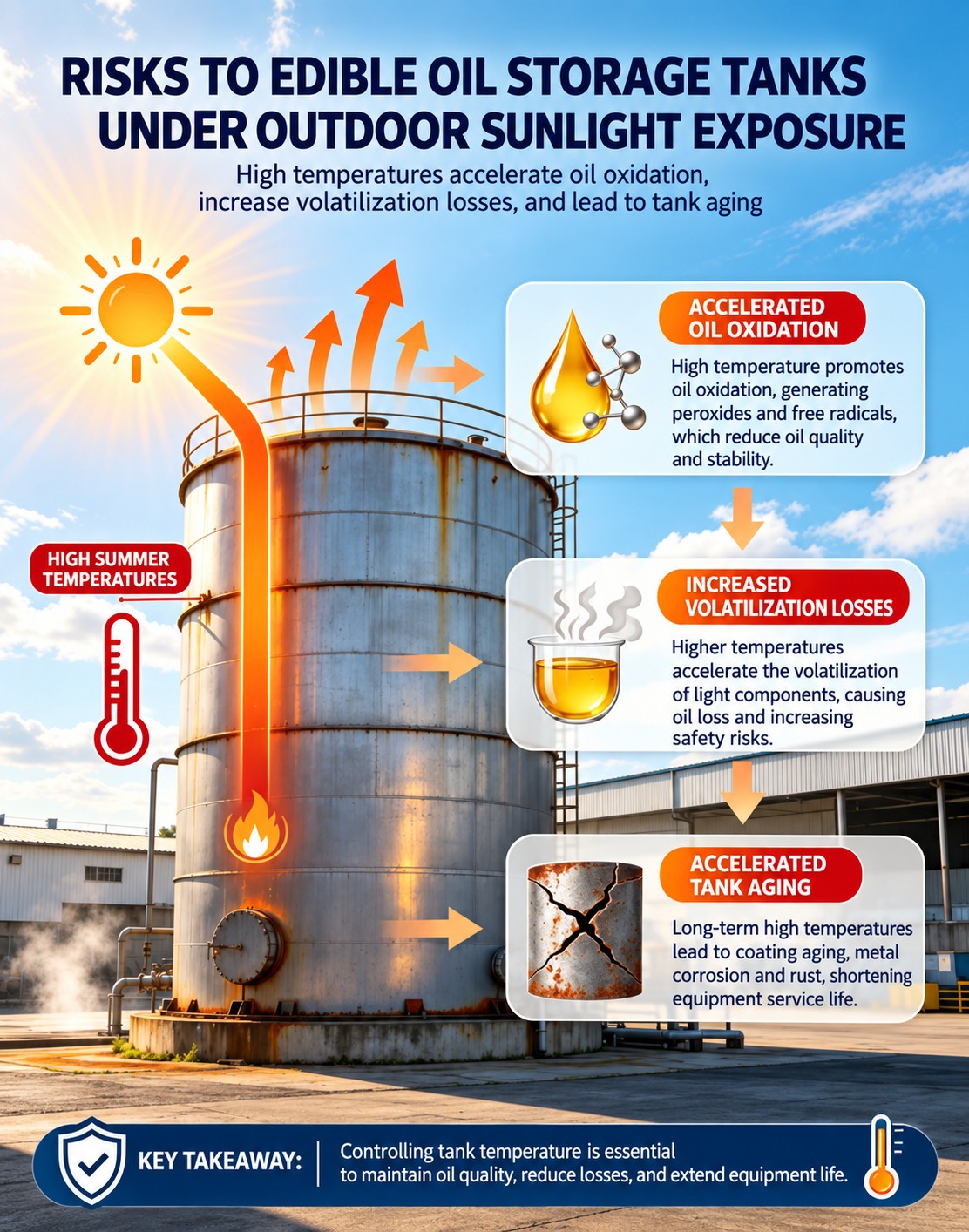
Edible oils are chemically complex organic substances that are highly sensitive to temperature. When stored in large outdoor metal tanks, these oils are subjected to intense and prolonged solar radiation. During a Guiyang summer, exterior tank wall temperatures can frequently exceed 60°C (140°F). This localized heat is rapidly conducted into the oil mass, triggering several detrimental processes:
• Accelerated Oxidation: High temperatures act as a catalyst for the oxidation of unsaturated fatty acids. This process increases the peroxide value (PV) and acid value (AV), leading to rancidity and the loss of essential nutritional components.
• Volatilization Losses: As the internal temperature of the tank rises, the vapor pressure of the oil increases. This leads to higher rates of volatilization through tank vents, creating economic waste.
• Thermal Fatigue: The repeated cycles of extreme thermal expansion and contraction accelerate the fatigue of the tank shell, reducing the lifespan of the storage infrastructure.
Passive Radiative Cooling: Harnessing The Physics Of Outer Space
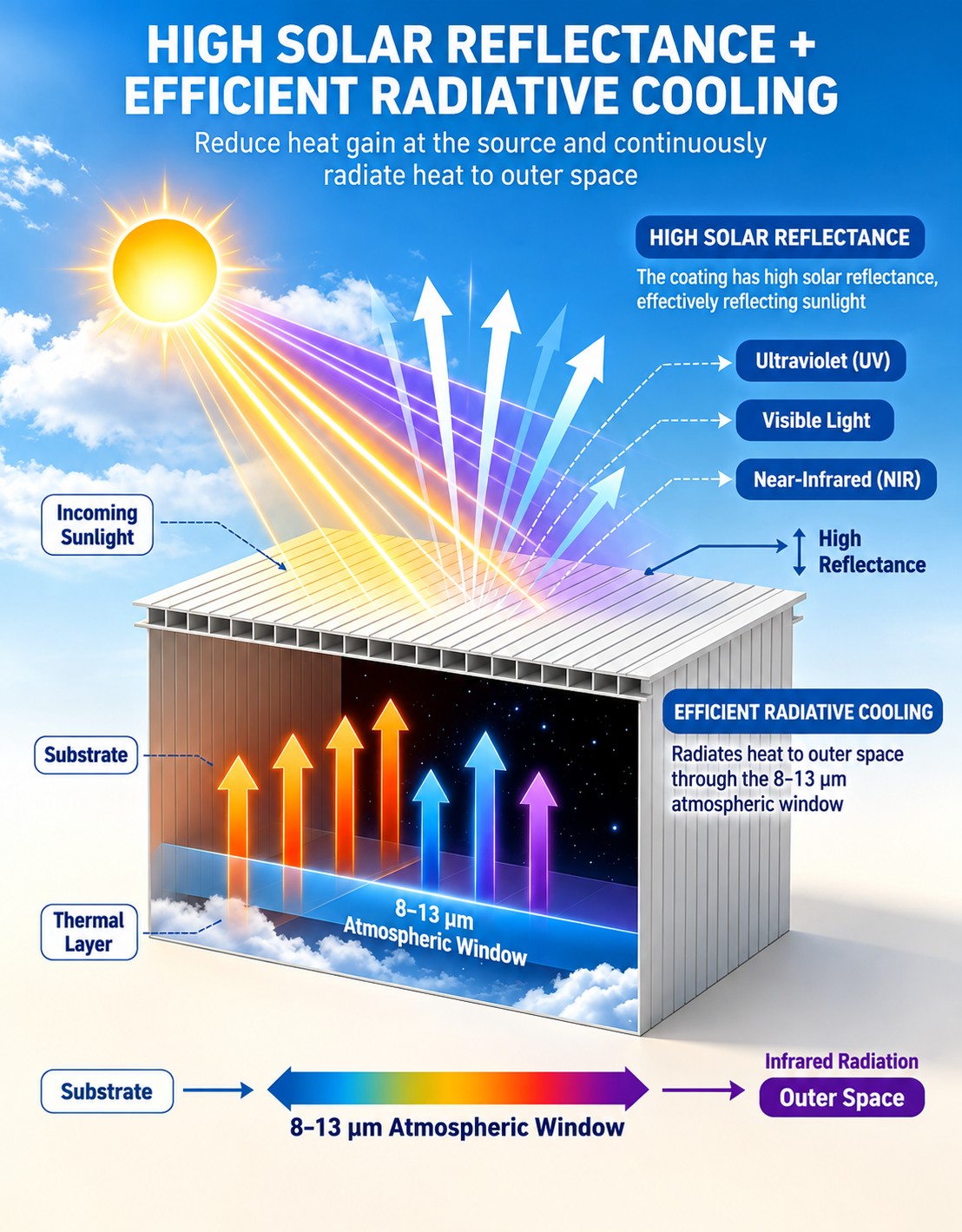
The solution implemented at the Guiyang grain depot leverages the revolutionary principle of passive radiative cooling (PRC). Unlike traditional white paints that merely scatter visible light, radiative cooling coatings interact with the entire electromagnetic spectrum to achieve sub‑ambient cooling without electricity.
Ultra‑High Solar Reflectance
The coating reflects over 92% of total solar energy, including the ultraviolet (UV) and near‑infrared (NIR) spectrums. This prevents the initial absorption of thermal energy by the tank's metal surface, acting as the first line of defense.
The 8–13 Μm "Atmospheric Window"
The core innovation lies in the coating's ability to emit heat. By leveraging materials that are highly emissive in the 8 to 13‑micrometer infrared band, the coating broadcasts surface heat directly into the "Atmospheric Window." This specific range allows the heat energy to bypass the air and escape directly into the deep vacuum of outer space, which maintains a temperature of approximately 3K (-270°C).
Implementation And Construction: The Multi‑Layer System
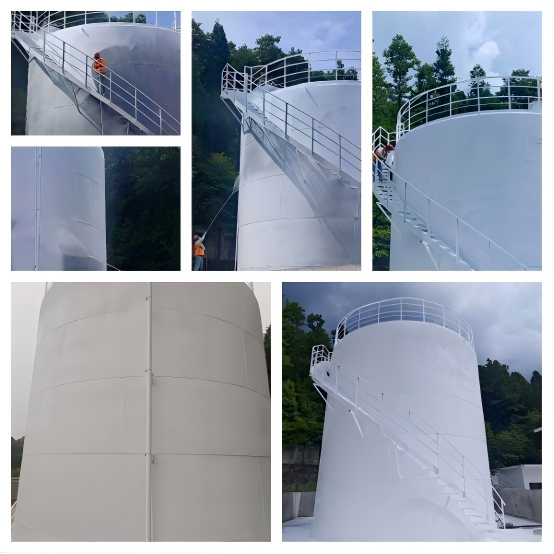
The Guiyang project involved the systematic treatment of multiple edible oil storage tanks. The construction process ensured zero downtime for the depot's critical operations. The implementation followed a precise protocol:
• Surface Preparation: Advanced cleaning techniques removed all traces of oxidation and pollutants to ensure maximum bond strength.
• Radiative Cooling Primer: A specialized primer provided both anti‑corrosion protection and an initial thermal barrier.
• Core Radiative Layers: Two comprehensive coats of high‑emissivity radiative cooling coating were applied via high‑pressure spray to ensure a uniform and consistent thickness.
• Weather‑Resistant Topcoat: A final protective layer preserved the optical properties of the radiative coating and prevent dirt accumulation in Guiyang's humid climate.
Comparative Analysis: PRC Vs. Traditional Methods
Traditionally, depots have relied on water spray systems or polyurethane insulation. However, water spraying is resource‑intensive and leads to rapid corrosion. Traditional insulation eventually saturates and can trap moisture against the tank wall. Radiative cooling offers a "third way"—a passive, maintenance‑free, and resource‑neutral solution that actively removes heat rather than just delaying its entry.
Quantifiable Benefits And Environmental Roi
Post‑implementation monitoring at the Guiyang site revealed dramatic improvements:
• Temperature Reduction: Exterior tank walls saw an average temperature drop of 20°C during peak sunlight hours. Surface temperatures often measured below the ambient air temperature.
• Internal Stability: The peak internal oil temperature was reduced by approximately 5°C, effectively extending the oil's shelf life.
• Infrastructure Longevity: The system is expected to extend the tank's maintenance cycle by 6 to 9 years, significantly lowering the total cost of ownership.
Furthermore, by reducing the reliance on electricity and water consumption, the depot has directly reduced its carbon footprint, aligning with national energy‑saving targets. This project serves as a cornerstone for sustainable agricultural logistics.
Conclusion: The Future Of Food Storage
The successful application of radiative cooling at the Guiyang grain depot underscores the viability of passive thermal management. By turning the tank surface into a high‑tech radiator directed at the universe, we can protect our vital food resources with minimal environmental impact. Managing the temperature of every drop of oil is a fundamental contribution to national food security and a greener, more resilient future.