
 EN

Two-Component Polyurea Spray Technology Creates a Seamless “Armor” for Fire Water Tank Waterproofing
Fire water storage tanks hold water year‑round, making concrete structures prone to microcracks and leakage. Traditional waterproofing materials age under prolonged immersion and often fail to meet durability requirements. In recent years, two‑component polyurea spray technology has become a key solution for fire water tank waterproofing due to its seamless, highly elastic, and durable properties.
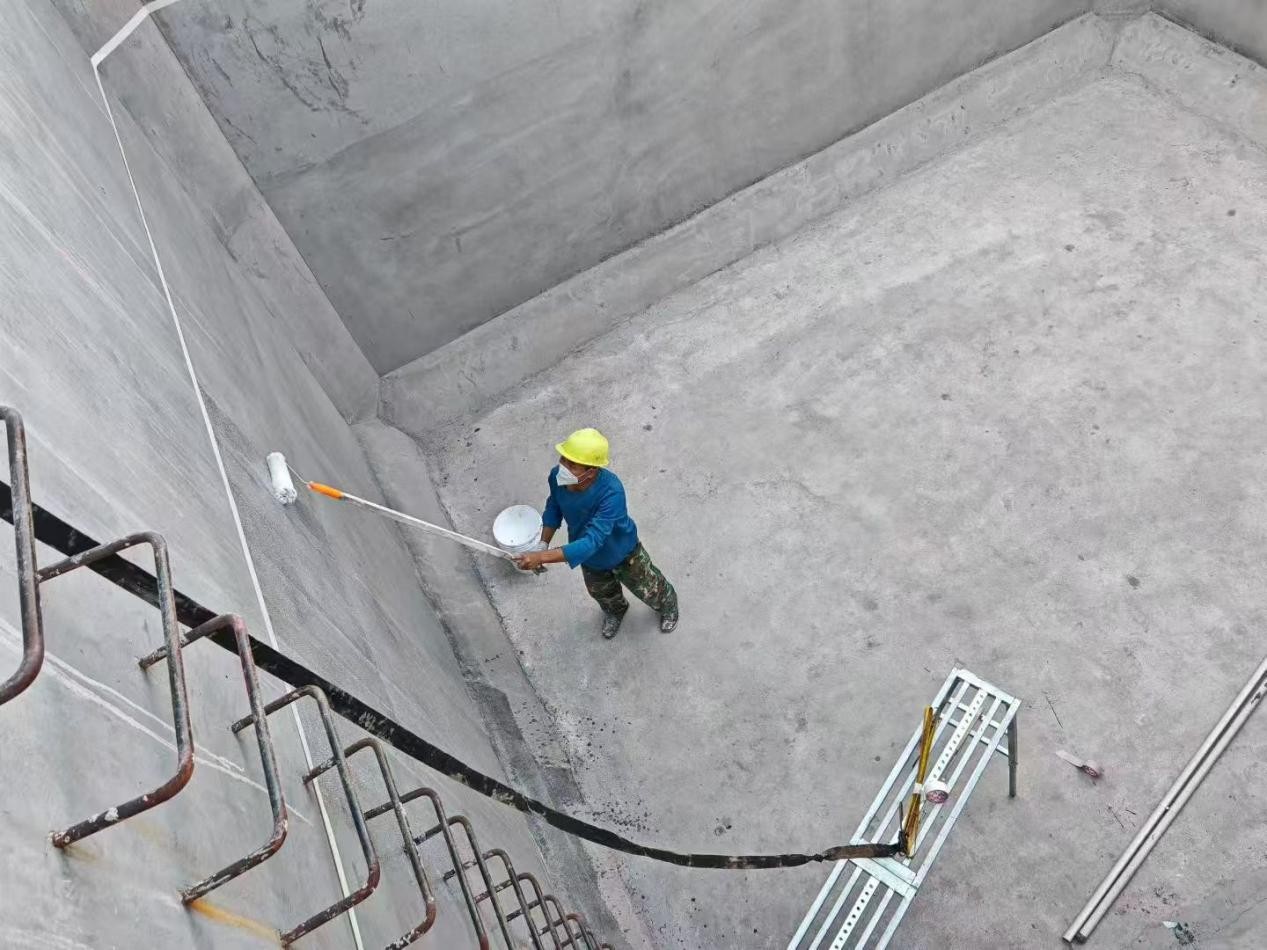
Two‑component polyurea is formed by high‑pressure impingement mixing of an isocyanate component and an amine component. It cures rapidly into a continuous elastic coating. The material has high solids content, contains no catalysts or volatile organic compounds, and remains inert after curing, meeting drinking‑water‑level hygiene requirements. Its tensile strength can exceed 16 MPa, and its high elongation accommodates concrete microcracking and thermal movement, effectively solving cracking and debonding issues common to traditional waterproofing layers.
Engineering applications have verified its reliability. In an industrial park fire water tank project, where concrete microcracks and seepage risks existed, a two‑component spray polyurea system was used with a design thickness of 1.5–2.0 mm. After substrate preparation, defect repair, fillet treatment of corners, application of a special primer, and reinforcement of detailed nodes, a 48‑hour full‑water immersion test showed no leakage. The underground fire water tank at the Hangzhou Asian Games Esports Venue also adopted this technology and was recognized by the owner.
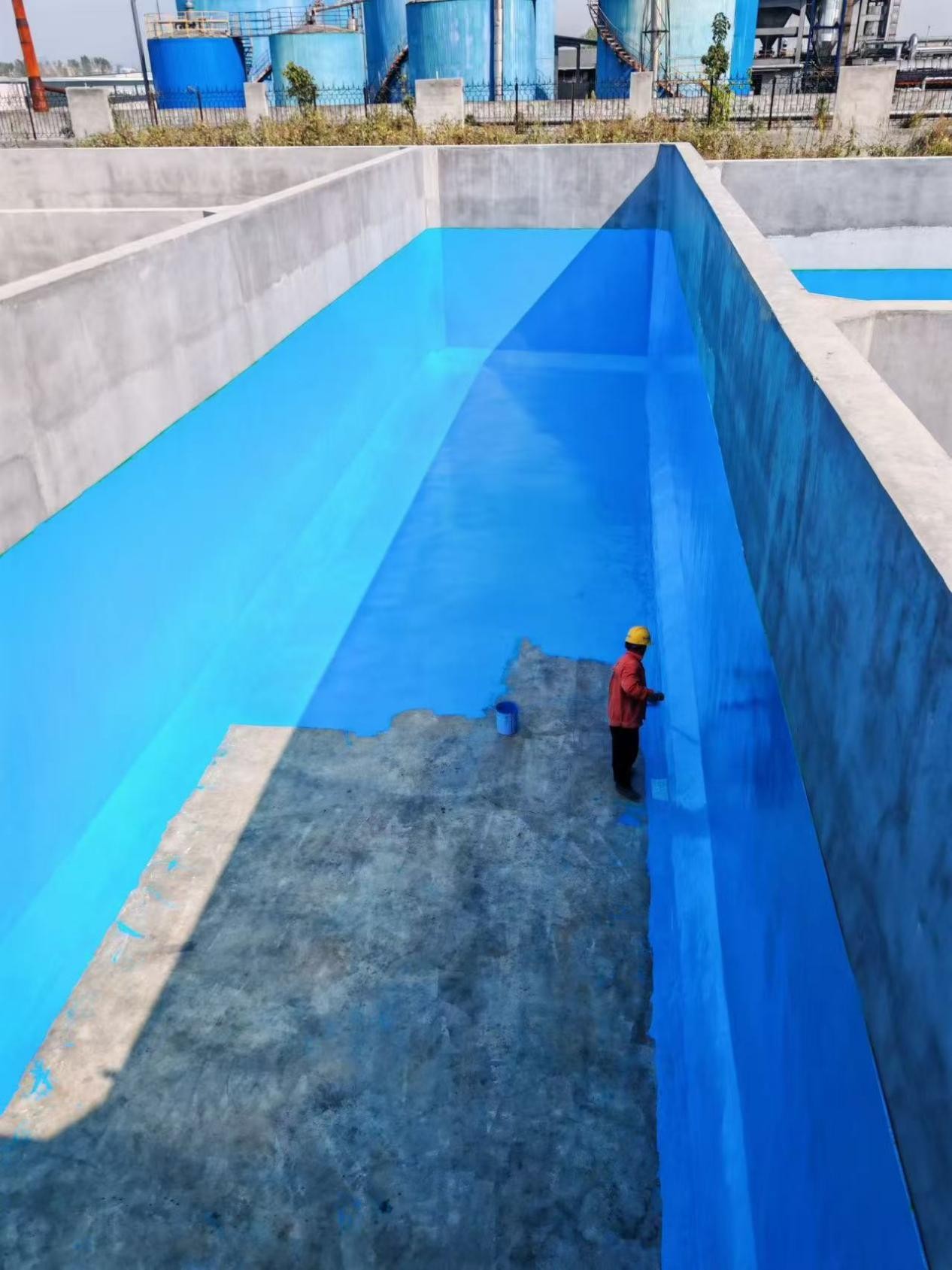
Compared with traditional epoxy, polyurethane, and cementitious coatings, polyurea cures quickly and does not sag when sprayed on vertical or overhead surfaces. It offers low‑temperature flexibility, heat resistance, and abrasion resistance, and can be applied in high‑humidity, low‑temperature conditions. This shortens construction time and reduces seams and weak points. These advantages are especially important for fire water tanks, which are often underground, structurally complex, and under tight schedules.
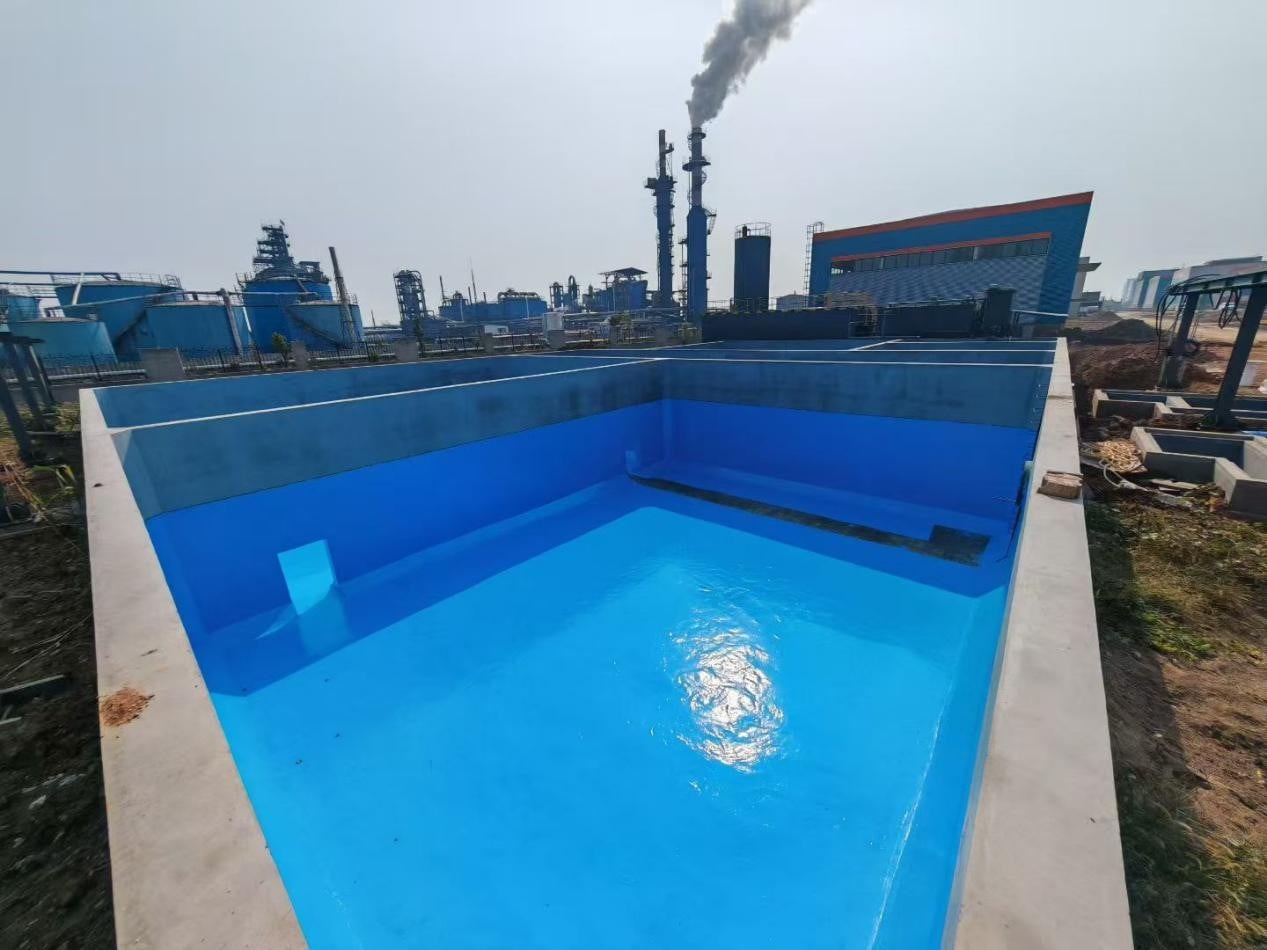
With the implementation of GB/T 23446‑2025, Spray Polyurea Waterproofing Coating, material performance requirements have been further raised. As the design service life of fire water tank waterproofing is no less than 10 years, two‑component polyurea technology is playing an increasingly important role. It is expected to see broader adoption in fire water storage, municipal water facilities, and other immersion environments.