
 EN
EN

A New Helper For Pharmaceutical Cold Chains: One Film, Stable Temperature
In pharmaceutical cold chain transportation, high temperature is one of the most troubling risk factors. Especially during last-mile delivery, outdoor transfer, or temporary storage, conventional insulated containers – while offering some thermal protection – may still see a slow rise in internal temperature under scorching sun or prolonged transport conditions, potentially exceeding the required storage range for medicines. Is there a way to gain extra safety time for insulated containers without increasing energy consumption or changing existing operating habits?
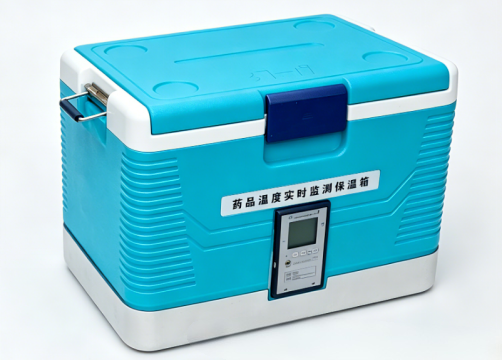
Radiative cooling film is emerging as an auxiliary solution worth attention.
Pain point: insulated containers are not "universal boxes"
Pharmaceutical insulated containers currently on the market mainly rely on insulation layers and coolants (ice packs, ice boxes) to maintain low temperatures. However, this approach has several practical limitations:
Passive heat resistance of insulation – can only slow down heat ingress, cannot actively dissipate heat.
Limited duration of coolants – effectiveness decreases after long transport or repeated door openings.
Heat absorption under sunlight – dark or conventional container bodies absorb heat, raising surface temperature and accelerating internal temperature rise.
For medicines that require real - time temperature monitoring (such as vaccines, biologics, insulin, etc.), once the temperature exceeds the limit, an entire batch may be at risk of being discarded.
Solution: Radiative cooling film – adding a "heat-dissipating surface" to insulated containers
Radiative cooling film is a new functional material based on passive radiative cooling technology. When applied to the outer surface of an insulated container, it achieves two effects:
Reflects sunlight – blocks most solar heat from entering the container
Radiates heat – transfers heat from the container surface outward in the form of infrared radiation
In simple terms, it upgrades the container from "passive insulation" to "active assisted heat dissipation" – reducing incoming heat while helping the container surface release heat more quickly. The entire process uses no electricity, no ice, and has no moving parts, without altering existing operating procedures.
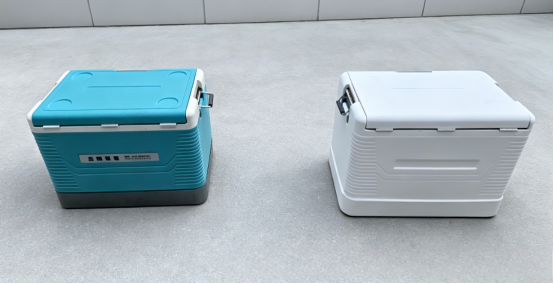
Result: Slower internal temperature rise under tested conditions
In comparative tests conducted under identical environmental conditions:
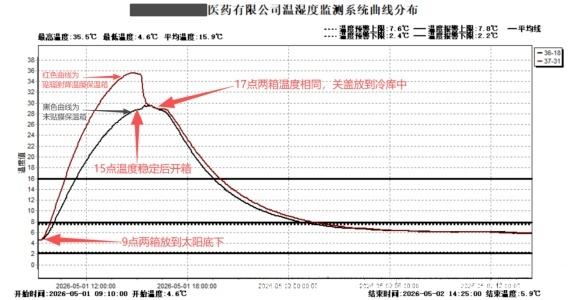
The external surface temperature of the insulated container fitted with radiative cooling film was significantly lower than that of the untreated control container.
The rate of internal temperature rise was noticeably slower.
In highheat, directsunlight scenarios, this provides transport personnel with more buffer time.
It should be noted that the radiative cooling film does not replace coolants or insulation layers; rather, it serves as an additional layer of auxiliary protection, helping to improve overall temperature control performance. For insulated containers equipped with realtime pharmaceutical temperature monitoring systems, this auxiliary cooling effect can be more directly recorded and traced.
Application Scenarios
Road transport during hot summer periods
Delivery vehicles without air conditioning, or temporary outdoor storage
Longdistance distribution in remote areas
Specific medicines sensitive to temperature fluctuations