
 EN
EN
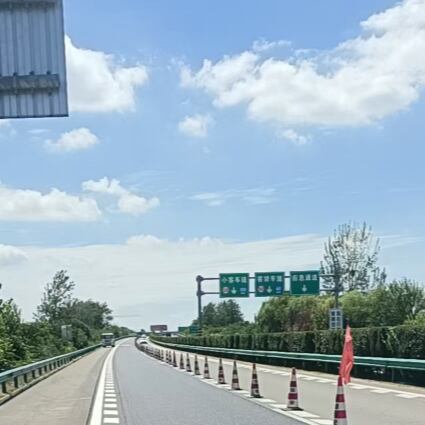
Traffic disruption during road marking operations represents one of the most significant challenges facing municipal authorities, highway contractors, and infrastructure managers worldwide. Every minute a lane remains closed for pavement marking translates directly into increased congestion, driver frustration, economic productivity losses, and elevated accident risk. Fast-drying road marking paint has emerged as a transformative solution that directly addresses these operational challenges by dramatically reducing the time required between application and full traffic reopening. This specialized coating technology enables marking crews to complete line striping projects with minimal lane closure duration, fundamentally changing how road maintenance operations impact daily traffic flow and public mobility.
The criticality of fast-drying road marking paint stems from the direct relationship between drying time and traffic management complexity. Traditional solvent-based paints often require thirty to sixty minutes before vehicle passage becomes safe, creating extended work zones that compound congestion and increase project costs through prolonged traffic control requirements. In contrast, advanced fast-drying formulations achieve full cure within three to ten minutes under optimal conditions, enabling rapid lane reopening that preserves traffic capacity during peak hours and reduces the operational footprint of essential maintenance activities. Understanding why this rapid cure capability matters requires examining the multifaceted impacts of marking operations on transportation networks, safety protocols, project economics, and public service delivery standards.
The Direct Economic Impact of Extended Lane Closures
Quantifying Congestion Costs During Marking Operations
The economic consequences of extended lane closures during road marking application extend far beyond the direct costs of labor and materials. Transportation economists have established that each hour of lane closure on a major arterial or highway generates measurable costs through increased fuel consumption, delayed commercial deliveries, missed appointments, and reduced regional productivity. When conventional road marking paint requires forty-five minutes to dry sufficiently for traffic, a ten-kilometer marking project can necessitate rolling closures spanning several hours or even multiple days, multiplying these economic impacts across affected communities and businesses.
Fast-drying road marking paint fundamentally alters this economic equation by compressing drying time to under ten minutes in most applications. This reduction enables contractors to complete the same ten-kilometer project with lane closures measuring only a fraction of traditional durations, dramatically lowering the aggregate congestion cost burden. For urban arterials carrying fifteen thousand vehicles daily, the difference between forty-minute and eight-minute drying times can translate to hundreds of vehicle-hours saved per project, representing thousands of dollars in avoided delay costs that benefit the broader economy rather than being absorbed as hidden social expenses of infrastructure maintenance.
Project Cost Efficiency Through Accelerated Completion
Beyond congestion impacts, the use of fast-drying road marking paint directly reduces project execution costs through decreased traffic control requirements and accelerated crew productivity. Traditional marking projects demand extensive temporary signage, portable barriers, advance warning systems, and sometimes police or flagger personnel to manage extended work zones safely. Each additional hour of lane closure proportionally increases these traffic management costs, which can represent thirty to forty percent of total project budgets for complex urban environments where safety protocols are necessarily stringent.
When contractors deploy fast-drying road marking paint, the compressed application-to-reopening timeline dramatically reduces traffic control duration and associated labor costs. A marking crew can advance more rapidly along a corridor, requiring fewer hours of flagger personnel, reduced portable barrier deployment, and lower advance warning system costs. This operational efficiency translates directly into lower bid prices for municipal contracts or improved profit margins for contractors, creating financial incentives throughout the supply chain to adopt rapid-cure technologies that simultaneously serve public interest through reduced traffic disruption.
Safety Considerations Driving Fast-Cure Technology Adoption
Work Zone Safety for Marking Crews
The safety of road marking crews represents a paramount concern that directly influences technology selection and operational procedures. Workers applying pavement markings operate in inherently hazardous environments where high-speed traffic passes within meters of their work area, creating constant risk of vehicle intrusion incidents. Extended work zone durations proportionally increase crew exposure to these hazards, with each additional minute spent in active traffic lanes elevating the statistical probability of serious accidents that can result in injury or fatality.
Fast-drying road marking paint directly enhances crew safety by minimizing the time workers must spend in active traffic environments. When drying time drops from forty minutes to seven minutes, crew exposure to passing vehicles decreases by more than eighty percent for equivalent project scope. This dramatic reduction in hazard exposure represents a compelling safety justification for technology adoption, particularly as transportation agencies increasingly prioritize zero-harm workplace cultures and contractors face mounting liability concerns related to work zone incidents. The ability to complete marking operations and exit hazardous areas rapidly provides measurable protection that extends beyond economic considerations into fundamental duty-of-care obligations.
Motorist Safety During and After Application
Motorist safety concerns during marking operations encompass both immediate work zone hazards and post-application surface conditions. Extended lane closures create complex traffic patterns requiring drivers to navigate unfamiliar merge situations, temporary lane shifts, and reduced capacity conditions that statistically correlate with elevated accident rates. Additionally, conventional paint formulations that remain tacky for extended periods can transfer onto vehicle tires, creating tracking issues and potentially affecting vehicle control if substantial material accumulation occurs on tire treads.
The rapid cure characteristics of fast-drying road marking paint address both safety dimensions by minimizing work zone complexity and eliminating tacky surface conditions before traffic resumption. Drivers encounter simplified traffic management scenarios when lane closures last only minutes rather than hours, reducing cognitive load and decision-making errors that contribute to work zone accidents. Simultaneously, the hard, fully-cured surface that develops within minutes prevents material transfer to tires and ensures optimal retroreflectivity immediately upon traffic resumption, delivering the safety benefits of fresh markings without the transitional period of compromised surface conditions associated with slower-curing alternatives.
Operational Flexibility Enabling Strategic Scheduling
Peak Hour Application Feasibility
Traditional road marking projects typically require scheduling during off-peak hours or overnight windows to minimize traffic disruption, creating operational constraints that increase project costs and limit contractor availability. Night work commands premium labor rates, requires specialized lighting equipment, and often yields lower quality control due to reduced visibility and worker fatigue factors. These constraints force transportation agencies to accept higher costs or defer necessary marking maintenance, creating deferred maintenance backlogs that compromise road safety through deteriorated pavement markings that fail to provide adequate guidance.
Fast-drying road marking paint fundamentally expands scheduling flexibility by making daytime and even peak-hour application feasible for many corridor types. When lane closure duration drops to ten minutes or less, contractors can implement rolling closures during moderate traffic periods without generating unacceptable congestion, eliminating the necessity for premium-rate night work in many situations. This scheduling flexibility reduces project costs, improves quality control through better visibility, and enables more responsive maintenance cycles that address marking deficiencies promptly rather than waiting for scheduling windows that may be weeks or months away.
Weather Window Optimization
Weather conditions exert significant influence over road marking operations, with humidity, temperature, and precipitation all affecting application success and drying performance. Conventional paint formulations require extended weather windows to ensure proper cure, often necessitating work delays when forecasts show marginal conditions that might compromise drying. These weather-related delays cascade into scheduling conflicts, increased mobilization costs, and frustrated stakeholders who observe marking projects stretching across multiple days or returning for completion attempts after weather interruptions.
The accelerated cure chemistry of fast-drying road marking paint dramatically shortens the required weather window, enabling contractors to complete projects during brief favorable periods between weather systems. A formulation that achieves traffic-ready cure in eight minutes requires only a ten to fifteen minute precipitation-free window rather than the sixty to ninety minute window needed for conventional alternatives. This compressed weather vulnerability period increases the number of workable days throughout the season, improves project schedule reliability, and reduces the frequency of partial completions that leave corridors with inconsistent marking conditions during multi-day weather delays.
Technical Performance Factors Supporting Traffic Management Goals
Cure Mechanism and Traffic Readiness
The technical foundation enabling fast-drying road marking paint to minimize traffic delays lies in its specialized cure chemistry that achieves rapid solvent evaporation and polymer cross-linking. Advanced formulations employ optimized solvent systems with high vapor pressure components that flash off rapidly under ambient conditions, combined with resin systems engineered for rapid film formation and early hardness development. This dual-action cure mechanism delivers a surface that becomes tack-free and traffic-ready within minutes while continuing to develop full mechanical properties and chemical resistance over subsequent hours.
Understanding the distinction between traffic-ready cure and full cure proves essential for proper application planning. Fast-drying road marking paint achieves sufficient hardness and cohesion within five to ten minutes to withstand vehicle tire contact without material transfer or surface disruption, meeting the threshold for safe lane reopening. However, optimal durability, chemical resistance, and long-term performance characteristics continue developing over the following twenty-four to forty-eight hours as residual solvents fully evaporate and polymer networks achieve maximum cross-link density. This performance progression allows immediate traffic accommodation while ensuring that final marking quality meets or exceeds standards established for conventional alternatives with longer initial cure requirements.
Application Variables Affecting Drying Performance
While fast-drying road marking paint delivers substantially reduced cure times compared to conventional formulations, actual drying performance varies based on environmental conditions and application parameters that crews must manage for optimal results. Temperature, humidity, wind velocity, pavement temperature, and film thickness all influence evaporation rates and cure progression, with ideal conditions enabling the shortest possible traffic-ready times and marginal conditions extending drying somewhat while still maintaining significant advantages over traditional alternatives.
Contractors maximize the traffic delay reduction benefits of fast-drying road marking paint through careful attention to application best practices that optimize cure conditions. Maintaining recommended film thickness ranges prevents excessively thick applications that extend drying time unnecessarily, while avoiding application during temperature or humidity extremes ensures consistent performance. Modern application equipment with precision flow controls and heated tanks helps maintain optimal material viscosity and application rates regardless of ambient conditions, while infrared temperature monitoring of pavement surfaces guides timing decisions that align application with peak drying conditions throughout the work day.
Regulatory and Specification Evolution Supporting Rapid-Cure Technologies
Performance Specification Development
Transportation agency specifications increasingly recognize the traffic management benefits of fast-drying road marking paint through performance-based requirements that incentivize or mandate rapid cure capabilities for specific project types. Modern specifications often establish maximum allowable drying time thresholds for high-traffic corridors or premium-quality marking systems, with requirements stating that materials must achieve traffic readiness within ten or fifteen minutes under defined temperature and humidity conditions. These performance mandates reflect agency recognition that drying time directly impacts project costs, safety, and public service delivery.
The evolution toward performance-based specifications creates market conditions favoring continued innovation in fast-drying road marking paint chemistry and application technology. Manufacturers invest in formulation development targeting ever-shorter cure times while maintaining durability, retroreflectivity, and cost competitiveness that meet agency value expectations. This specification-driven innovation cycle benefits transportation infrastructure stakeholders through continuously improving materials that deliver enhanced traffic management capabilities, positioning rapid-cure technology as the emerging standard rather than a premium alternative reserved for exceptional circumstances.
Environmental Compliance and Low-VOC Formulations
Environmental regulations governing volatile organic compound emissions from architectural and industrial coatings increasingly influence road marking material selection, with many jurisdictions establishing VOC limits that challenge traditional solvent-based formulations. Interestingly, many fast-drying road marking paint systems achieve their rapid cure characteristics through optimized solvent selection and efficient evaporation rather than simply increasing solvent content, enabling compliance with environmental mandates while delivering superior traffic management performance compared to higher-VOC conventional alternatives.
Advanced water-based and low-solvent fast-drying formulations represent the cutting edge of environmentally responsible rapid-cure technology, achieving traffic-ready times under fifteen minutes while maintaining VOC content below regulatory thresholds. These systems employ sophisticated polymer emulsions and coalescent packages engineered for rapid film formation without relying on high solvent loads, delivering the dual benefits of minimal environmental impact and compressed lane closure duration. As environmental regulations continue tightening globally, the alignment between rapid cure performance and environmental compliance positions fast-drying road marking paint as the sustainable choice that simultaneously serves traffic management and ecological stewardship objectives.
FAQ
How quickly can traffic resume after applying fast-drying road marking paint?
Traffic can typically resume within five to ten minutes after applying fast-drying road marking paint under optimal temperature and humidity conditions. The exact time varies based on environmental factors, with warmer temperatures and lower humidity accelerating cure, while cooler or more humid conditions may extend drying to twelve to fifteen minutes. Contractors verify traffic readiness through physical testing that confirms the surface has achieved sufficient hardness to prevent tire marking or material transfer before reopening lanes to vehicles.
Does fast-drying road marking paint compromise durability compared to conventional alternatives?
Modern fast-drying road marking paint formulations deliver durability performance equivalent to or exceeding conventional alternatives when properly applied according to manufacturer specifications. The rapid initial cure that enables quick traffic resumption represents only the first stage of a continuing cure process that develops full mechanical properties and chemical resistance over subsequent hours and days. High-quality fast-drying systems routinely achieve service lives of eighteen to thirty-six months in moderate traffic conditions, matching or surpassing conventional solvent-based paints while providing superior traffic management benefits during application.
Can fast-drying road marking paint be applied during cooler weather conditions?
Fast-drying road marking paint can be applied during cooler weather, though drying times extend somewhat as temperatures decrease below optimal ranges. Most formulations specify minimum application temperatures between five and fifteen degrees Celsius, with drying times at these lower temperatures reaching fifteen to twenty-five minutes rather than the five to ten minutes achieved at warmer temperatures. Even with this temperature-related extension, fast-drying formulations still cure substantially faster than conventional alternatives under identical conditions, maintaining significant traffic management advantages throughout the applicable temperature range.
What cost premium should agencies expect when specifying fast-drying road marking paint?
The material cost premium for fast-drying road marking paint typically ranges from ten to twenty-five percent compared to conventional solvent-based alternatives, varying by specific formulation and regional market conditions. However, this material cost difference often becomes neutral or even advantageous when total project costs are considered, as reduced traffic control duration lowers labor, equipment, and traffic management expenses substantially. Many agencies find that the total installed cost of fast-drying systems equals or undercuts conventional alternatives while delivering superior traffic management outcomes and enhanced safety for both crews and motorists during application operations.
Table of Contents
- The Direct Economic Impact of Extended Lane Closures
- Safety Considerations Driving Fast-Cure Technology Adoption
- Operational Flexibility Enabling Strategic Scheduling
- Technical Performance Factors Supporting Traffic Management Goals
- Regulatory and Specification Evolution Supporting Rapid-Cure Technologies
-
FAQ
- How quickly can traffic resume after applying fast-drying road marking paint?
- Does fast-drying road marking paint compromise durability compared to conventional alternatives?
- Can fast-drying road marking paint be applied during cooler weather conditions?
- What cost premium should agencies expect when specifying fast-drying road marking paint?