Ensuring Stable Base Station Operation Starts with Lowering Surface Temperatures: A Case Study of Radiative Cooling Materials in Yuncheng, ShanxiCommunication base stations face a persistent challenge: heat generated by equipment operation is compoun...

Ensuring Stable Base Station Operation Starts with Lowering Surface Temperatures: A Case Study of Radiative Cooling Materials in Yuncheng, Shanxi
Communication base stations face a persistent challenge: heat generated by equipment operation is compounded by direct sunlight, causing heat to accumulate inside the cabinet and dissipate slowly, forcing air conditioners to run continuously over extended periods. In Yuncheng, Shanxi, some base stations have trialed a combined solution of radiative cooling coating and radiative cooling film. The objective is to reduce external heat ingress, lower air conditioning loads, and ensure stable equipment operation.
Actual issues faced by base stations in Yuncheng
Yuncheng is located in southern Shanxi, where summer temperatures are high and sunshine is abundant. Base station cabinets are exposed outdoors for long periods; solar radiation raises their surface temperatures, and heat is conducted inward through the enclosure, compounding the equipment's own heat generation and increasing the cooling burden on the air conditioning system.

High air conditioning loads not only mean higher electricity bills, but also affect the stability of the equipment operating environment. Some sites have experienced operational fluctuations during high-temperature periods due to excessive heat.
Solution: Radiative cooling film + coating – auxiliary heat dissipation with zero power consumption
The radiative cooling materials applied in this project are based on passive radiative cooling technology and serve two main functions:
High reflectivity: efficiently reflects solar heat (visible light and near-infrared) to reduce heat absorption on the cabinet surface.
Mid-infrared radiative cooling: dissipates surface heat as infrared radiation through the atmospheric window (8–13 µm) into outer space.
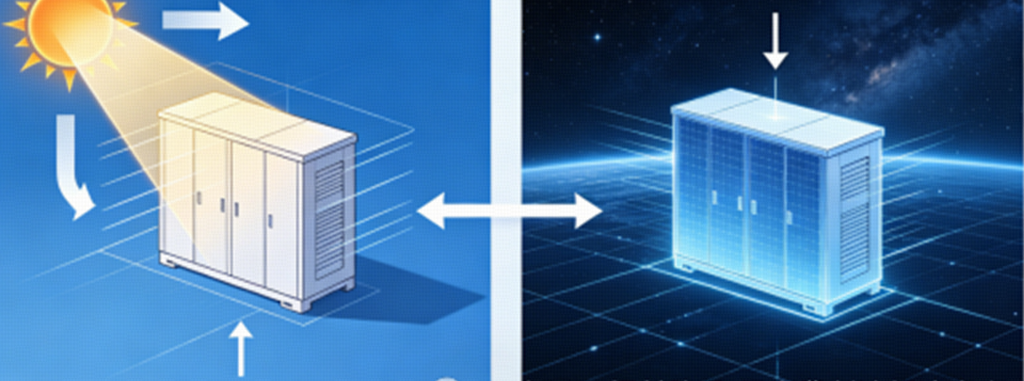
The entire solution requires no electricity, has no moving parts, and needs no maintenance.
Observed changes in actual operation
Based on feedback from sites where the materials have been applied, the benefits of the radiative cooling materials are mainly reflected in three areas:
Lower surface temperatures – the cabinet exterior feels noticeably cooler to the touch, with reduced heat transfer to the interior;
Reduced air conditioner runtime – compressor startstop frequency decreases, and the unit no longer operates under high load for extended periods;
More stable operating environment – internal temperature fluctuations are smaller, contributing to longterm reliable equipment performance.
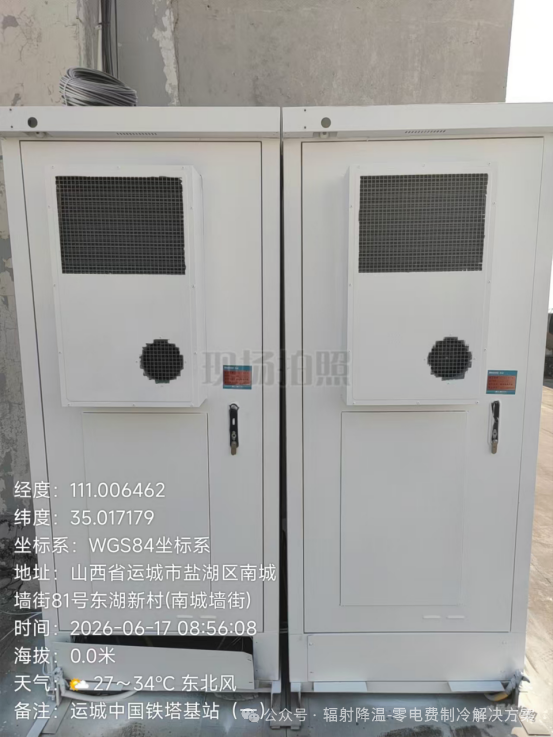
Effect Description and Applicable Conditions
It should be noted that:
Radiative cooling materials are an auxiliary heatdissipation measure; they do not replace air conditioning, but help reduce its load.
Effectiveness is influenced by factors such as sunlight conditions, air temperature, and installation orientation, and may vary between sites.
They can be used in combination with existing insulation and ventilation measures to form an integrated solution.
Some products also feature hydrophobic and selfcleaning properties, which help reduce the impact of dust accumulation on heatdissipation performance.
Base station stability is closely related to ambient temperature. Radiative cooling materials offer an approach that requires no electricity, no maintenance, and is easy to implement – helping base stations reduce external heat ingress, allowing both equipment and air conditioners to operate more efficiently.

 EN
EN