Advanced Synthetic Composite Materials: Superior Strength, Durability & Performance Solutions

All Categories

Get a Free Quote

Our representative will contact you soon.
Email
Mobile/WhatsApp
Name
Company Name
Message
0/1000

synthetic composite materials

Synthetic composite materials represent a revolutionary advancement in engineering and manufacturing, combining two or more distinct materials to create products with superior properties that exceed those of individual components. These engineered materials typically consist of a reinforcing phase, such as carbon fibers, glass fibers, or aramid fibers, embedded within a matrix material like polymer resins, metals, or ceramics. The main function of synthetic composite materials lies in their ability to deliver exceptional strength-to-weight ratios, enhanced durability, and customizable properties tailored to specific applications. Technological features of these materials include advanced fiber architecture, precision matrix formulations, and sophisticated manufacturing processes such as resin transfer molding, pultrusion, and automated fiber placement. These technologies enable manufacturers to control fiber orientation, resin distribution, and interfacial bonding, resulting in materials with predictable mechanical properties and consistent performance characteristics. Applications for synthetic composite materials span numerous industries, including aerospace, automotive, marine, construction, sports equipment, and renewable energy sectors. In aerospace applications, these materials contribute to lighter aircraft structures while maintaining structural integrity under extreme conditions. The automotive industry utilizes synthetic composite materials for body panels, chassis components, and interior elements to reduce vehicle weight and improve fuel efficiency. Marine applications benefit from the corrosion resistance and lightweight properties of these materials in hull construction and deck components. Construction projects incorporate synthetic composite materials for reinforcement systems, architectural elements, and infrastructure repair solutions. The renewable energy sector employs these materials extensively in wind turbine blades, where their fatigue resistance and aerodynamic properties are essential for optimal performance. Sports equipment manufacturers leverage synthetic composite materials to create high-performance products that offer athletes competitive advantages through improved strength, flexibility, and reduced weight.


New Products

Synthetic composite materials offer remarkable advantages that transform how industries approach design and manufacturing challenges. The primary benefit lies in their exceptional strength-to-weight ratio, which allows engineers to create structures that are significantly lighter than traditional materials while maintaining or exceeding required load-bearing capacities. This weight reduction translates directly into improved fuel efficiency for vehicles and aircraft, reduced transportation costs, and enhanced performance across various applications. The customizable nature of synthetic composite materials provides manufacturers with unprecedented design flexibility, enabling them to tailor material properties to meet specific requirements. Engineers can adjust fiber orientation, matrix composition, and manufacturing parameters to optimize characteristics such as stiffness, impact resistance, thermal properties, and electrical conductivity. This customization capability eliminates the need for multiple material systems and reduces overall component complexity. Corrosion resistance represents another significant advantage of synthetic composite materials, particularly in harsh environmental conditions where traditional metals would deteriorate rapidly. Unlike steel or aluminum, these materials do not rust, corrode, or degrade when exposed to moisture, chemicals, or salt water, resulting in substantially reduced maintenance costs and extended service life. The dimensional stability of synthetic composite materials ensures consistent performance over time, as they exhibit minimal expansion or contraction under temperature variations and maintain their shape under mechanical stress. This stability proves crucial in precision applications where tight tolerances must be maintained throughout the product lifecycle. Manufacturing efficiency benefits include reduced assembly time due to the ability to create complex shapes in single manufacturing operations, eliminating the need for multiple joints and fasteners. The materials can be molded into intricate geometries that would be impossible or extremely expensive to achieve with traditional materials. Additionally, synthetic composite materials offer excellent fatigue resistance, withstanding repeated loading cycles without failure, which extends product lifespan and reduces replacement costs. Their thermal properties can be engineered to provide insulation or heat dissipation as required, making them suitable for extreme temperature applications. The materials also demonstrate superior vibration damping characteristics, reducing noise and improving comfort in automotive and aerospace applications.

Latest News

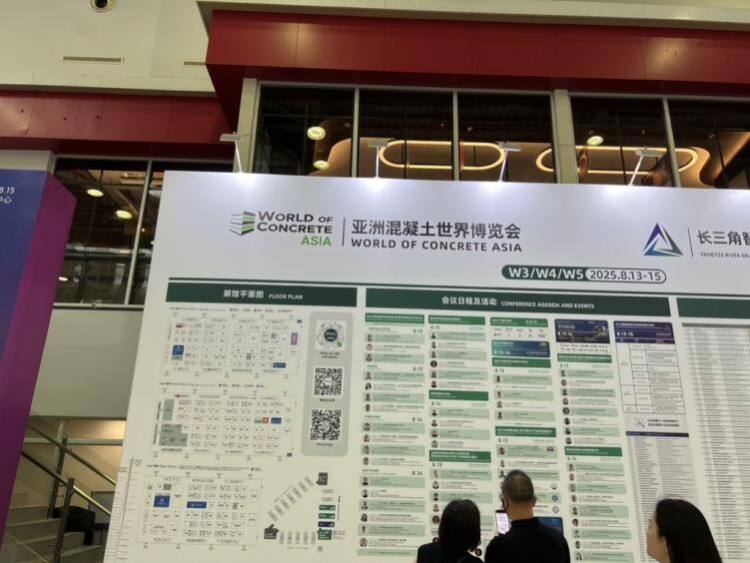
Shandong Huacheng High-Tech Participates in WORLD OF CONCRETE ASIA 2025 in Shanghai

25

Feb

Shandong Huacheng High-Tech Participates in WORLD OF CONCRETE ASIA 2025 in Shanghai

View More
Shandong Huacheng High-Tech Shines at CHINACOAT 2025 Shanghai

25

Feb

Shandong Huacheng High-Tech Shines at CHINACOAT 2025 Shanghai

View More
Huacheng High-Tech Recognized as Provincial Enterprise Technology Center by Shandong Province

27

Feb

Huacheng High-Tech Recognized as Provincial Enterprise Technology Center by Shandong Province

View More

Get a Free Quote

Our representative will contact you soon.
Email
Mobile/WhatsApp
Name
Company Name
Message
0/1000

synthetic composite materials

Revolutionary Strength-to-Weight Performance

Revolutionary Strength-to-Weight Performance

The extraordinary strength-to-weight ratio of synthetic composite materials fundamentally changes engineering possibilities across industries, delivering unprecedented performance advantages that were previously unattainable with conventional materials. These advanced materials achieve tensile strengths comparable to high-grade steel while weighing up to 70 percent less, creating opportunities for revolutionary design approaches that prioritize both structural integrity and weight optimization. This remarkable characteristic stems from the synergistic relationship between high-strength reinforcing fibers and carefully engineered matrix systems that distribute loads efficiently throughout the material structure. Carbon fiber reinforced polymers, for example, can achieve specific strengths exceeding 500 kN⋅m/kg, far surpassing aluminum alloys and steel in weight-normalized performance metrics. The practical implications of this superior strength-to-weight ratio extend far beyond simple weight savings, enabling entirely new categories of products and applications. In aerospace applications, synthetic composite materials allow aircraft designers to reduce structural weight while maintaining safety margins, resulting in improved fuel efficiency, extended range, and increased payload capacity. Commercial aircraft utilizing these materials can achieve fuel savings of 20-25 percent compared to traditional aluminum construction, translating into significant operational cost reductions and environmental benefits. The automotive industry leverages this advantage to meet increasingly stringent fuel economy standards while enhancing vehicle performance and safety characteristics. Sports car manufacturers use synthetic composite materials to create body panels and structural components that reduce overall vehicle weight by hundreds of pounds, dramatically improving acceleration, handling, and braking performance. The construction industry benefits from this strength-to-weight advantage in applications ranging from seismic retrofitting to bridge construction, where reduced dead loads allow for longer spans and more efficient structural designs. Wind energy applications particularly benefit from the strength-to-weight characteristics of synthetic composite materials, as lighter turbine blades can capture wind energy more efficiently while reducing stress on supporting structures and foundations.
Unmatched Corrosion and Environmental Resistance

Unmatched Corrosion and Environmental Resistance

Synthetic composite materials demonstrate exceptional resistance to corrosion, chemical attack, and environmental degradation, providing long-term performance stability that far exceeds traditional materials in challenging operating conditions. This superior environmental resistance stems from the inert nature of the polymer matrix systems and reinforcing fibers, which do not undergo electrochemical reactions that cause rust, oxidation, or galvanic corrosion common in metallic materials. Unlike steel structures that require regular painting, galvanizing, or other protective treatments to prevent corrosion, synthetic composite materials maintain their structural integrity and appearance without ongoing maintenance interventions. This resistance extends to exposure to saltwater, acids, alkalis, solvents, and other aggressive chemicals that rapidly degrade conventional materials. Marine applications particularly benefit from this characteristic, as boat hulls, offshore platforms, and coastal infrastructure constructed from synthetic composite materials can operate for decades without the hull fouling, galvanic corrosion, or metal fatigue issues that plague traditional steel and aluminum structures. The chemical processing industry utilizes these materials for tanks, pipes, and equipment that handle corrosive substances, eliminating the need for expensive alloy materials or protective coatings that eventually fail and require replacement. Infrastructure applications in harsh environments, such as bridges in coastal areas or industrial facilities exposed to chemical vapors, achieve dramatically extended service lives when constructed with synthetic composite materials. The materials resist ultraviolet radiation degradation through advanced resin formulations and protective gel coats, maintaining structural properties and appearance even under intense solar exposure. Temperature cycling, moisture absorption, and freeze-thaw conditions that cause cracking and failure in traditional materials have minimal impact on properly designed synthetic composite materials systems. This environmental resistance translates into substantial life-cycle cost advantages, as reduced maintenance requirements, extended replacement intervals, and eliminated downtime for repairs provide compelling economic benefits that often justify higher initial material costs within the first few years of service.
Design Flexibility and Manufacturing Versatility

Design Flexibility and Manufacturing Versatility

The remarkable design flexibility and manufacturing versatility of synthetic composite materials enable engineers and manufacturers to create complex geometries, integrate multiple functions, and optimize performance characteristics that would be impossible or prohibitively expensive with traditional materials and manufacturing processes. This versatility stems from the moldable nature of composite materials during manufacturing, allowing designers to create intricate shapes, varying wall thicknesses, and integrated features in single manufacturing operations. Unlike machining metal components from solid billets, which wastes material and requires multiple operations, synthetic composite materials can be formed directly into near-net shapes that minimize waste and reduce manufacturing complexity. The ability to orient reinforcing fibers in specific directions enables engineers to place strength exactly where needed, creating anisotropic properties that optimize structural efficiency for particular loading conditions. This directional reinforcement capability allows designers to create structures that are exceptionally strong in primary load directions while minimizing material usage in areas experiencing lower stresses. Manufacturing processes such as resin transfer molding, vacuum-assisted resin transfer molding, and automated fiber placement provide precise control over fiber architecture and resin distribution, ensuring consistent quality and enabling mass production of complex components. The consolidation capabilities of synthetic composite materials manufacturing allow multiple traditional parts to be combined into single integrated components, eliminating joints, fasteners, and assembly operations while improving structural continuity and reducing weight. Aerospace manufacturers routinely create one-piece fuselage sections that would require hundreds of individual metal parts and thousands of fasteners using traditional construction methods. Automotive applications benefit from integrated door panels, instrument panels, and structural components that incorporate mounting features, wire routing channels, and aesthetic elements in single molding operations. The ability to embed sensors, heating elements, or other functional components directly within the material structure during manufacturing creates smart materials with integrated monitoring or active control capabilities. Tool-free forming processes for certain synthetic composite materials enable rapid prototyping and low-volume production without expensive tooling investments, accelerating product development cycles and reducing time-to-market for innovative products.

Get a Free Quote

Our representative will contact you soon.
Email
Mobile/WhatsApp
Name
Company Name
Message
0/1000